File Library
Explore Grasshopper definitions, example files, tutorials and reusable computational design files.
2,172 matching files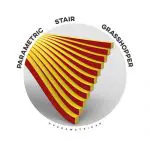
Parametric Stairs
In this Rhino Grasshopper stair tutorial we will use a simple loft surface to model a series of parametric stairs. First we will model the base curves in Rhino and use the loft command in Grasshopper to make the surface. Then we will use th
View file →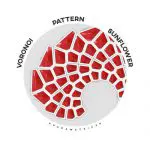
Voronoi Pattern Sunflower
In this Grasshopper tutorial, we produce a Voronoi Pattern based on Sunflower seed distribution. The technique we will use is the Maelstrom component to twist a series of straight lines so we’ll not use the actual Fibonacci sequence to prod
View file →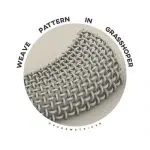
Smooth Weave Pattern
In this Rhino Grasshopper tutorial, we will use Mesh+ and Weaverbird to model a weaving pattern on a Nurbs surface. First, we will model a Surface in Rhino using Sweep1 and then we will use Mesh+ to model the pattern. Finally, we will use w
View file →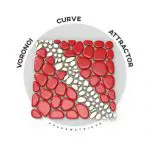
Voronoi Curve Attractor
In this Grasshopper Voronoi tutorial, we will use curve attractors to control the Voronoi cells. First, we will use a boundary to make the base Voronoi cells and then we will define a curve and populate random points in it. In the end, we w
View file →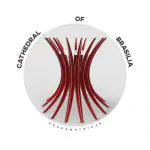
Cathedral of Brasilia
In this Rhino Grasshopper tutorial, we will model the Cathedral of Brasilia. First, we will use a technique to model the structural section in Rhino and then we will use a similar approach to model it in Grasshopper. We will use 3 circles t
View file →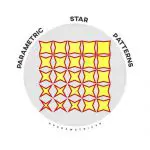
Parametric Stars
Duration : 23 Minutes
View file →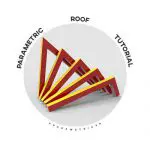
Parametric Roof
In this Rhino Grasshopper tutorial, we will model a series of shape-changing elements which can be used as a parametric roof. First, we will define 3 points and by changing the location of the points we can make a polyline. We will use the
View file →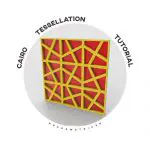
Cairo Tessellation
In this Grasshopper Mesh+ tutorial, we will use the Cairo Tiling component to produce a Cairo Tessellation. First, we will use the component to model the base mesh and then we will use the Weaverbird Plugin to give the lines some thickness
View file →
Kinetic Rain
In this Rhino Grasshopper tutorial, we will remodel the Kinetic Rain by ART+COM Studios (2012). First, we will model a rectangular array of points and then we will use the point attractor technique to move the points down. Finally, we can c
View file →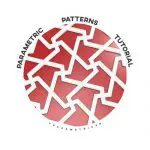
Parametric Patterns
In this Rhino Grasshopper tutorial, we will model a parametric pattern based on squares. First, we will scale & rotate the square and connect the center to the mid-edges. Finally, we will connect the mid-edges points to the corner of the ma
View file →
USA Embassy UK
In this Rhino Grasshopper tutorial, we will model a parametric facade based on the Kieran Timberlake’s “crystalline cube” for the US Embassy in London. First, we will model a series of base polylines for the modules and then we will define
View file →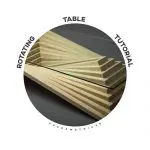
Rotating Table
In this Rhino Grasshopper tutorial, we are going to model a rotating table. First, we are going to make a series of rectangles by using offset and range and then we will rotate them around a point and Y-axis. We will finally give them thick
View file →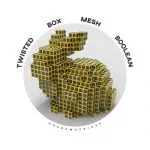
Twisted Box Mesh Boolean
In this Pufferfish Grasshopper tutorial, we will use the “Twisted Box Array” combined with “Mesh Boolean Twisted Boxes” to convert any mesh into a series of boxes and then use the Weaverbird Plugin to convert them into frames and windows.
View file →
Voronoi Puzzle
In this Grasshopper tutorial, we will model a Voronoi Puzzle and discover how the connections can be made. In the end, you will learn how to put numbers on the pieces. You can even use this technique to make a parametric facade.
View file →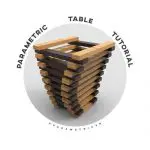
Parametric Table
In this Rhino Grasshopper Tutorial, we will model a parametric table by sectioning a simple deformed box and then extracting the right edges. Finally, we will model the solids and Nest the sections on the ground for fabrication.
View file →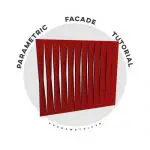
Parametric Facade
In this Grasshopper tutorial, we will model a parametric facade based on the twisting louvers of the Luanda sports Pavilion. First, we will model a straight surface and then we will divide it to vertical strips by using the Isotrim command
View file →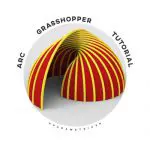
Rotating Arcs
In this Rhino Grasshopper tutorial, we are going to model a dome based on the Bamboo Structure Project / Pouya Khazaeli Parsa. First, we are going to make a series of arcs in the XZ plane and then we will rotate those arcs to make the final
View file →
Infinity Cube
In this Grasshopper tutorial, we are going to model an infinity cube from scratch. First, we will use the Fillet Edge component to get rid of the corner edges and then we will extract the straight edges which will give us the infinity cube.
View file →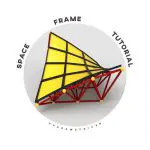
Space Frame
In this Lunchbox Grasshopper Tutorial, we will model a space frame structure by defining a freeform surface. Then we will project it onto the ground and use the lunchbox “space truss structure 2” to model the lines. We will also use some te
View file →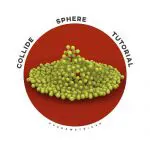
Collide Sphere
In this Kangaroo Grasshopper tutorial, we will use a simple method of a collision that collides a series of spheres with a solid, based on gravity! We can also add a floor to the definition and let the particles bounce on the floor!
View file →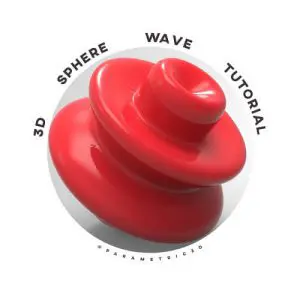
3d Sphere Wave
In this Rhino Grasshopper tutorial you can learn how to apply a sine wave on a sphere based on a point attractor. First we will model a mesh sphere and then we will use the distance between the point attractor and the mesh vertices to move
View file →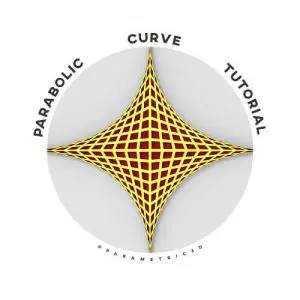
Parabolic Curve
In this Grasshopper tutorial, I want to teach you how you can simply make a parametric parabolic curve. First, we will define the baselines then we will divide it into points and by managing the index of the data we can finally make the pat
View file →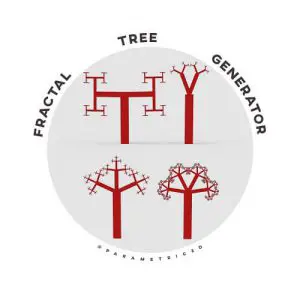
Fractal Tree Generator
In this Fractal Tree Generator tutorial, we will use Grasshopper3d to model a parametric Fractal tree which can generate different tree models. First, we will use a plane and an arc to define the angle and length of the branches and then we
View file →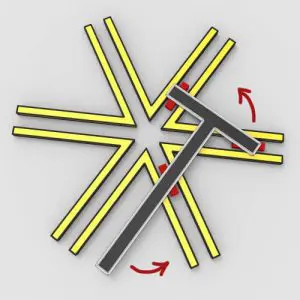
Kinetic Art #1
In this Kinetic Art tutorial, we are going to model a rotating mechanism by defining the motion of the handle and then use the intersection between circles and the railways to model the mechanism.
View file →