File Library
Explore Grasshopper definitions, example files, tutorials and reusable computational design files.
547 matching files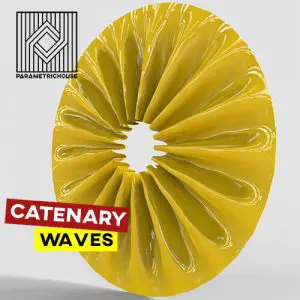
Catenary Waves
in this paracourse lesson, we are going to model a catenary wave surface. We are going to learn how to use “Shift List” and “Shift Paths” properly and also dividing data into groups by using “Partition List”
View file →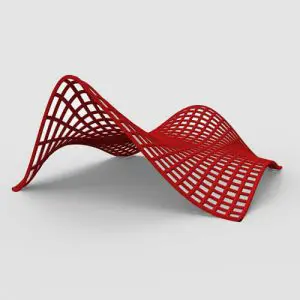
Spatial Deformation
In this Paracourse Lesson, we will use the Spatial Deformation (Custom) in Grasshopper to deform a surface by defining points with zero deformations and points with vector deformation. We will also control a mathematical function called “Fa
View file →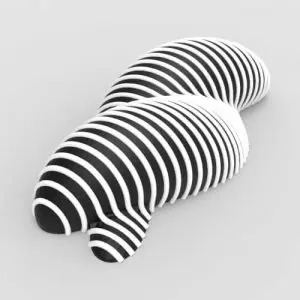
Math (Surfaces)
In this “ultimate package” grasshopper tutorial I will explain about two different techniques to model mathematical surfaces: Isomesh & Parametric. First I will explain how you can model the Isomesh surfaces in Grasshopper with the Monolith
View file →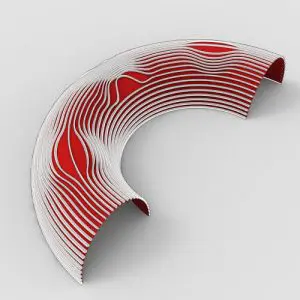
Pinch ‘n’ Spread
In this ParaCourse lesson, we will study the Pinch n Spread component of the Pufferfish plugin and how we can use it to morph a series of strips on a Nurbs surface.
View file →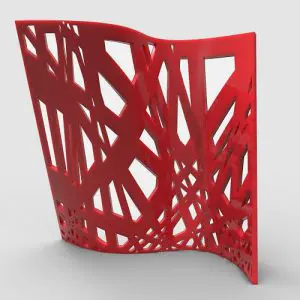
UV Pattern
In this Grasshopper Lesson, we will work with the UV curves of a NURBS surface to produce patterns or curves. First, we will study how the surface domain 2 works and then we will use intersections to produce more patterns.
View file →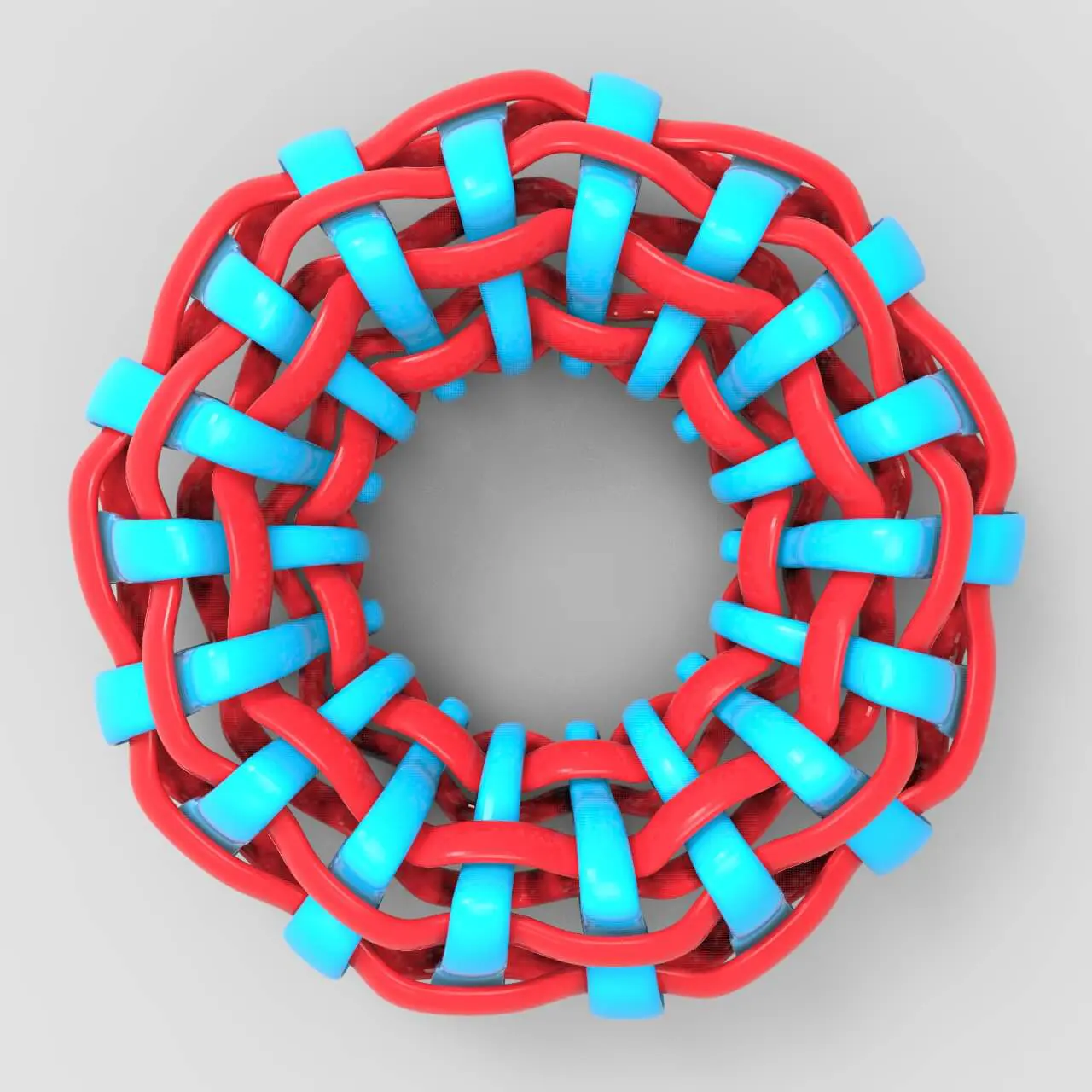
Weave Pattern
In this Paracourse lesson we will study how to make a weaving pattern on a closed nurbs surface. First we will study the problem of non closed meshes and how we can fix it by a joining technique. Then we will smooth the mesh and give it thi
View file →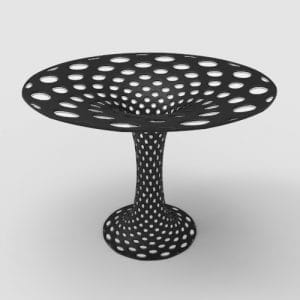
3-Sorting Data
In this Grasshopper tutorial, I will teach you how to use sorting data to produce a spiral based surface and then convert it to smooth Mesh. First I will produce a surface by revolving a profile curve and then we will divide the surface wit
View file →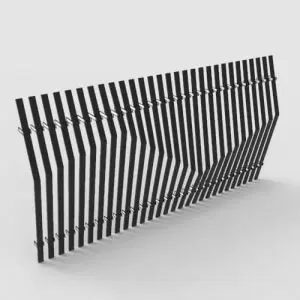
3-Intersection Sectioning
In this Grasshopper Lesson, I will show you how you can use intersections to design the sections of a parametric model. You can use this technique to control your sections. First, we will make a series of lines and then by using the interse
View file →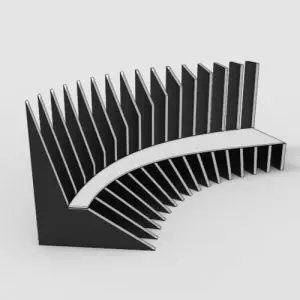
2- Multiple Sections
In this lesson, you will learn how to use multiple sections and a curved path to produce a parametric model. First I will explain how we can orient the section into the perpendicular planes and then we will model the rest
View file →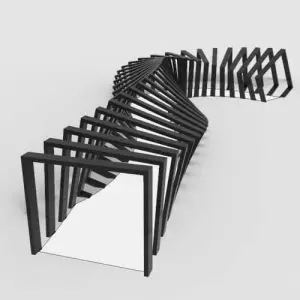
1- One section,One path
In this lesson, you will learn how to use a single section and a curved path to produce a parametric model. First I will explain how we can orient the section into the curve and then we will model the rest.
View file →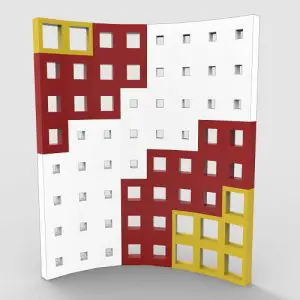
14- Paneling Tools (List)
In this Paracourse lesson, we will use the Paneling Tools plugin to cover a Nurbs surface with a series of modules. We will use point attractors to distribute the modules and in the end, we will count each module and export them in differen
View file →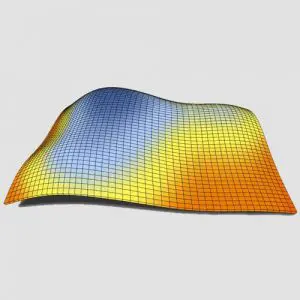
9- Based on colour
In this tutorial, I will explain how you can use Gradient to color a set of panels based on their height.
View file →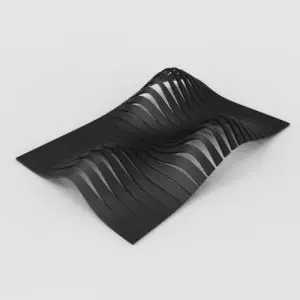
8- Based on height
In this grasshopper tutorial, I will model a facade louver system based on scaling. First I will divide the facade into louvers and then I will extract the lines and scale them based on the height of the surface. then we will remodel the lo
View file →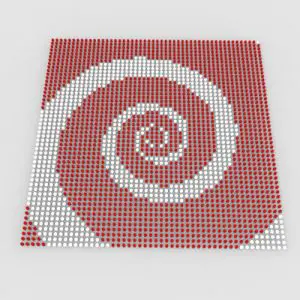
7- Image Attractor
In this video tutorial, I will explain how to use image sampler to produce a complex form based on an image in grasshopper. The image sampler tool will use u,v point mapping to extract the brightness and we can use it to manipulate geometry
View file →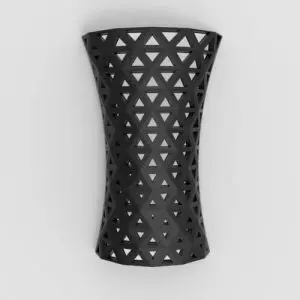
5- Parametric Curve Attractor
In this video tutorial, I will explain how you can use u,v coordinate system to produce a parametric curve on a surface and use it as an attractor to affect the frames of triangular panels.
View file →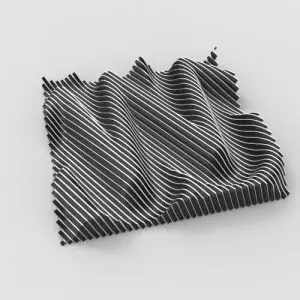
4-Single Curve Attractor
In this grasshopper tutorial i will use a curve as an attractor and use it to deform a surface. You will learn how to define the distance between a set of point and a single curve.
View file →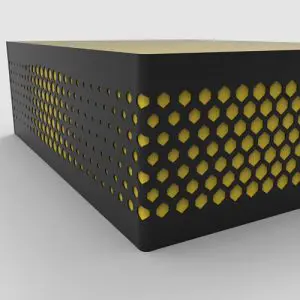
12- Parametric Hexagons
In this Paracourse Lesson, we are going to model a series of hexagons which scale based on point attractors. We are also going to study how to fix the cells on the closed Nurbs surface seam.
View file →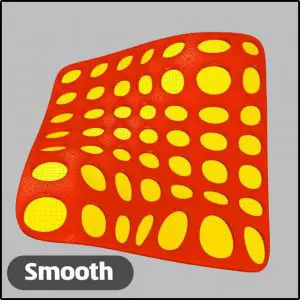
11- Paneling Attractors
In this Paracourse Lesson, we are going to use different attractors in Paneling tools to model a parametric grid that deforms with Point/Curve/Random and surface curvature. Finally, we are going to smooth the result.
View file →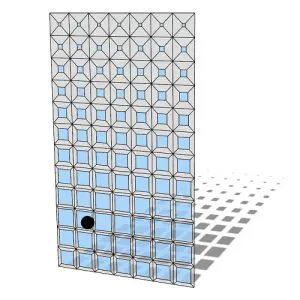
#Height Attractor
In this Tutorial, you can learn how to scale a series of windows on a flat facade based on their height or their Z distance from a point attractor.
View file →